
.png?width=48&height=48&name=Group%201%20(3).png)
























Why At-Home Speech Exercises Matter
When learning a new skill—whether it’s kicking a footy, riding a bike, or making a tricky "s" sound—the brain relies on repetition. Our paediatric Speech Pathologists use the time in the clinic to teach your child the foundations of a skill. However, bringing those exercises into your home environment ensures your child gets the repeated practice necessary to build strong neural pathways.
By doing small, consistent speech therapy exercises between clinic visits, your child will progress faster, build confidence, and smoothly transition their new skills into everyday life at home, at kindy, or at "big school".
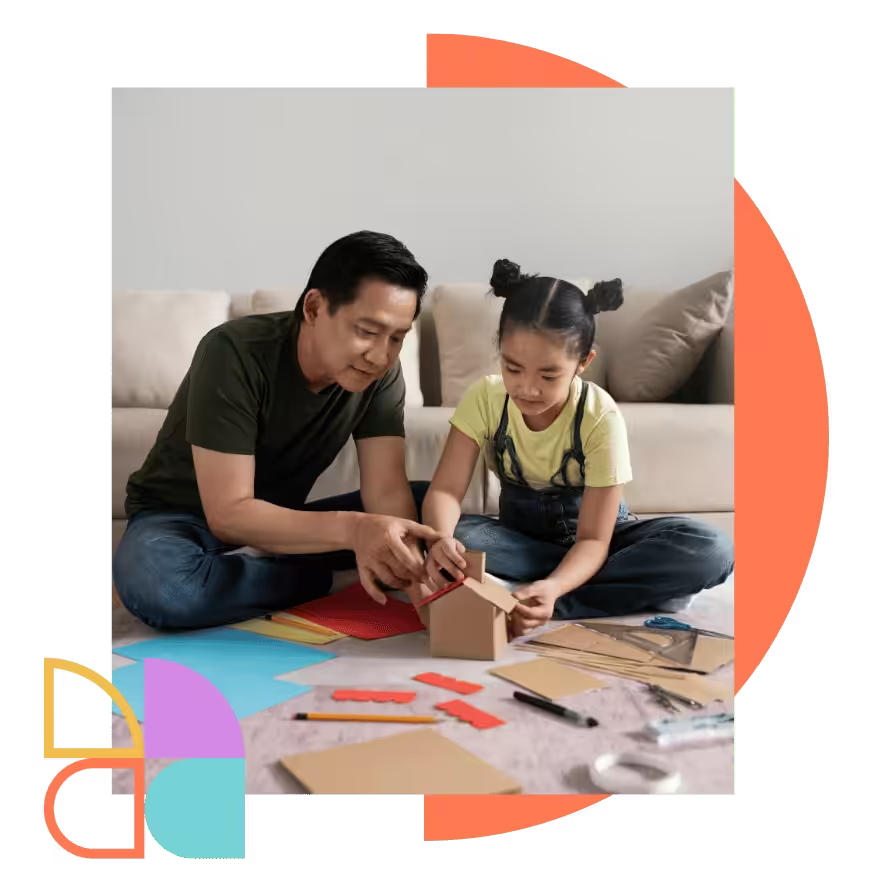
The daar Approach: Empowering Parents in Canterbury
You are your child’s absolute best teacher. Our goal at daar is to empower parents and carers across the Inner West and South-West Sydney. We use a family-centred, neurodiversity-affirming approach.
This means we spend time during our clinical sessions coaching you. We’ll show you exactly how to do the exercises so you feel completely confident managing them at home. We ensure these activities are tailored to your child’s unique interests—whether they love dinosaurs, Bluey, or playing in the sandbox in the backyard.
NDIS Support for At-Home Therapy
Training parents and carers to deliver therapy exercises at home is a core part of building capacity. If your child is a Self-Managed or Plan-Managed NDIS participant, parent coaching and the development of custom home-practice programs are fully covered under their NDIS plan.
.png)
Frequently Asked Questions:
How often should I practise speech exercises with my child at home?
Consistency is much more effective than long, exhausting sessions. We generally recommend the "little and often" approach. Practising for just 5 to 10 minutes, a few times a day (like during bath time, the drive to school, or while eating an afternoon snack) is far more beneficial than sitting down for a strict hour once a week.
What should I do if my child refuses to do their speech "homework"?
First of all, don't panic—this is very common! At daar, we strongly believe that therapy shouldn't feel like a chore. If your child is resisting, take the pressure off. Stop calling it "practice" and integrate the exercises into the fun things they already want to do. If they love playing with cars, we will show you how to hide their target speech sounds under the wheels. If they are getting frustrated, take a break. Our therapists are always here to help you troubleshoot and find new, fun ways to engage them.
Do you provide the resources for the exercises, or do I need to buy things?
We provide everything you need! At the end of your session at our Canterbury clinic, your Speech Pathologist will supply you with customised resources—such as visual schedules, game boards, flashcards, or specific strategies tailored to your child. We also specialise in showing you how to use everyday household items (like pots, pans, and standard toys) to do your speech exercises, so there is no need to buy expensive therapy equipment.
.svg)


Find Us Here

Shop 1 364 Canterbury Rd Canterbury NSW 2193
Underground parking is available behind our building on Onslow St. Take the elevators up to Ground Floor to access our clinic.
.svg)

Get access to quality, Efficient, and professional care.
Request a call to find out how daar can help you achieve your health goals.

Leading source of information for allied health news, studies and resources.

We support you to be self-determined and independent, giving you the control and freedom to achieve your individual goals

We provide superior quality, client-centric and innovative treatment to support you to realise your full potential





.svg)